Welcome to whatever is on my mind!

Some people use the term "nonsense" but I prefer to use the phrase "uncommonly sensed" because it's more reflective of creative types.

Showing posts with label books. Show all posts

Monday, June 12, 2017

Discovering Philip K. Dick

 
I wasn't a big reader of science fiction, so I’d never read Philip K. Dick’s work, despite having seen Bladerunner over a dozen times. However, I recently watched the Amazon series The Man in the High castle, and while I loved the first season I lost interest during the second season. That’s when I asked the age-old question: How much better was the book?

We all know that movies and TV series almost always fall short of the books upon which these are based. A visual medium has some advantages over the printed word, but it also has limitations. A picture is worth a thousand words, but the printed word has the ability to provide insight into the cognitive depth of the characters. This is where the Amazon series fell short for me: it began with an alternate reality in which the characters discover the possibility of an alternate reality that is our current reality.

If this sounds a bit like reality inception, that’s because it is - but this concept alone isn’t what made the book more interesting. The characters’ psychological responses to the threat (or promise) of a different reality and the conjectures they make on the plausibility of our current reality are fascinating. This provides insight into the subjective nature of perception, especially when it comes to politics. It’s more than a simple picture of what things would look like if Hitler had won WWII. This books explores human nature and our psychological defenses. In other words, it’s the human, rather than scientific, element that makes the book speak to us.

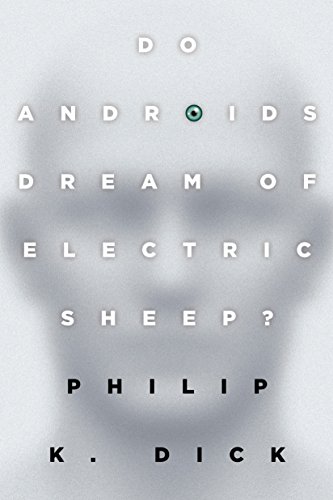
I have since finished both Do Androids Dream of Electric Sheep (which became the movie “Bladerunner”) and The Man in the High Castle, and am starting on Ubik, considered by many critics to be Dick’s masterpiece. I have a lot of respect for Philip K. Dick as a writer after reading these books. Even if you don’t think you’d like science fiction, you might want to sample a bit of this author’s work. It’s worth your time.

Monday, March 13, 2017

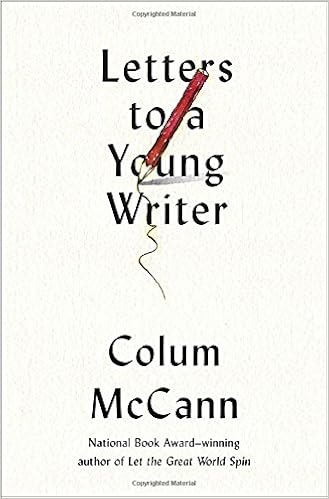
Letters to a Young Writer


https://www.amazon.com/Letters-Young-Writer-Practical-Philosophical/dp/0399590803/


Colum McCann has put together a collection of essays advising would-be writers. In an age where anyone can publish, this book addresses the serious writer and not those who engage in the profession as an endeavor to earn a fast buck. This book is about the craft of writing and the process of creation. It’s not about getting rich quickly.

Sure, we’d all love a best seller. However, financially motivated art often lacks the substance needed to draw an audience. This book is about the process which may or may not result in financial gain. If you have the disease of writing it is in your blood and you will seek to cultivate it more or less like an addiction, rather than an occupation. There is no way not to write if it’s within you. The worst part is that simply scratching down words isn’t enough: those of us with the writing bug must also continually seek improvement. That’s where this book comes into play.

A good part of writing is finding the connection with readers, and that only happens when we’re engaged and willing to be exposed in order to establish this relationship. McCann addresses this in his essay “The First Line.” He advises that each story should open with a natural flow, without forcing too much information upon the reader too quickly. Think of it like a first date: the goal is to incite interest but not to overwhelm or frighten the reader. This is the art of pacing or as McCann says, “achieving a balance.”

The book addresses the rules of writing by stating that “there are no rules,” but when the author states that you can dispose of grammar only when you know these rules he is really saying that you must understand this agreement of structure between the writer and reader before making the decision of when to ignore it. It’s like knowing when to use slang and when to avoid it. Once you know the purpose of these rules you can make a more informed decision about how well your piece fits into - or needs to be free from them.

This book was outstanding and one of the best I've read concerning the art of writing. It encourages creative types to get out of their internal vortex and to see their work from the reader's perspective, which is essential for gaining an appreciative audience. It also covers topics such as writer's block (which he refers to as "The terror of the white page"), why we tell stories, and handling critics. The essays are short and filled with bits of wisdom and insight that can assist writers at all stages of a career.

If you loved Stephen King's "On Writing" then this book is definitely for you. If you’re very new to writing and looking for practical advice on how to get your published, then the book isn’t for you. However, if you know that writing is your calling and there’s no way to avoid it - this is highly recommended reading.

Letters to a Young Writer is releasing on April 4, 2017.

Wednesday, October 26, 2016

Book Review: The Pier Falls


If I were to compare the craft of writing to the field of architecture, I’d say that Mark Haddon is like the Frank Lloyd Wright of the literary world. His writing is modern and graceful with some experimental elements, but it’s always structurally sound and high quality. Haddon is most well known for his 2003 book The Curious Incident of the Dog In The Night-Time, but he’s been publishing his work for over two decades and has a number of titles for both adults and children. His latest book is a collection of short stories called The Pier Falls and Other Stories.

The issue with many short story collections is the lack of relationship the stories have to one another. Sometimes I feel like a shopper at a bargain bin when I read these types of books, wondering if the contents of the bin even came from the same source. However, this collection holds together through several underlying themes, as well as the consistency of the writing. Haddon takes the reader to an equilibrium on the edge between mythology and modernity, showing the transcendence of the human experience through his characters. There’s a rational-spiritual dichotomy peeking through the prose at numerous points, but the text always feels real.

Because these are short stories, a number of different themes are explored in different settings. For example, in the title piece The Pier Falls the author explores tragedy by showing us both the horrible and the absurd manifested side by side as a pier collapses into the ocean. Individuals grasp for life or succumb to death as a Strauss recording continues to play over loudspeakers during the event, reminding victims that life will waltz on with or without them.

In the story The Island, we’re given a re-telling of Ariadne’s final days on the island of Dias. Unlike Homer’s Odyssey, this version is in first person and we get to hear Ariadne process the events leading up to her death as she struggles for survival.

The theme of Loneliness also comes up in several of the pieces, with each story examining a different facet of it. We see the complexity of human relationships as circumstances and situations molds these bonds. A particular experience may have a lasting impact which can bring people together or tear them apart from one another or themselves.

In The Woodpecker and The Wolf a woman goes to space to escape relationships, but then becomes pregnant. The space mission encounters troubles and the woman watches the other astronauts perish, including the baby’s father. The struggle for survival and the new life for which she now feels responsible causes her to reassess her relationships and what she valued in them.

Diazepam makes an appearance in several of the pieces, acknowledging our modern tendency to self-medicate. This theme of self-medicating is explored more fully in the story titled Bunny, in which a morbidly obese man feels that his hunger and disappointment are more painful than the consequences of his overeating, and so he eats. Lots.

Haddon is a modern writer that I strongly recommend to many would-be writers. His style is modern, functional, and graceful without being ostentatious. His work definitely falls under the label of "literary" and shows remarkable facility to move back and forth between verb tenses keeps the reader centered on the story without feeling the jerk between past and present. His characters are complex but not over-explained or overtly obvious. The plots are cultivated in such a manner as to appear natural and yet perfectly manicured at the same time. Writing should always reflect life, but literary writing uses language and plot structure to explore it more fully. Haddon accomplishes that in these stories.

Several of the pieces in The Pier Falls have been previously published in literary journals, so if you’re reluctant to plunge into the whole book you can find a few of these stories online. Whether you read a sample of these stories online or purchase the entire book is up to you. Regardless, I encourage individuals looking for some great modern fiction to read them. The writing feels effortless, as good writing should, but afterwards it also causes me to marvel at how well it’s put together. It’s the sort of book that easily gets me on the train without me first asking where it will go or when it will arrive. I know that I’ll enjoy the ride, and the scenery will be worth my time.

Monday, October 17, 2016

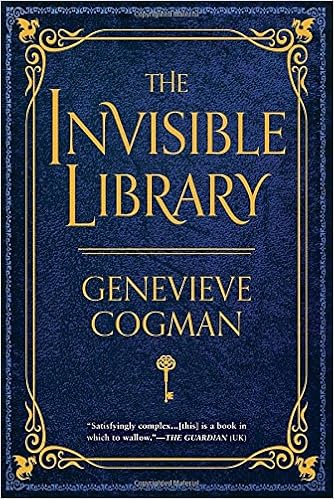
Genevieve Cogman's Invisible Library


Genevieve Cogman is the author of The Invisible Library fantasy book series for young adults. A few months ago I received an advance review copy of the first book from the publisher and I enjoyed the story very much. The second book in this series have now been released and I’m looking forward to reading it. What I enjoyed most about the first book was the concept of a hidden library hat contains versions of books from alternate universes. The thought that there could be hundreds or thousands of versions of our favorite stories is appealing to a reader such as myself.  Aside from the incredible library, what caught my attention in her writing were the strong characters and action sequences - something we don’t typically associate with a book about books. This is truly an adventure novel that keeps moving. I had an opportunity to interview Genevieve and here are her responses to some of my questions.

Q: You’ve written some strong female characters in this book. Can you describe what inspired each of these (Irene, Coppelia, and Bradamant) characters?
A: I’m not sure any of them have a single point of inspiration. Irene is the standard protagonist who just wants to get on with the job, and finds herself with too many things to juggle at once. She’s also a thorough bookworm and daydreamer (which is why she picked the name “Irene”, after all) and a competent operative, a little bit Modesty Blaise though also a lot of Moneypenny.
Coppelia’s the mentor who knows more than she’s prepared to admit, a Librarian with a lot of history (such as why she’s got a mechanical arm) and her own personal tastes in literature. (For the record, she likes science fiction, particularly books about artificial intelligence.)
And Bradamant’s the rival who has a past history with the protagonist, and whose methods and morality are different enough that they come into conflict about how to achieve their goals, though they end up working together. She’s a person whose first argument is always “the ends justify the means”, and who sees herself as a misunderstood hard worker who makes the hard choices which nobody else will commit to.
I think that ultimately any of them could have been male or female. First and foremost, they’re people.

Q: What sort of research did you do in preparation for (or during) the writing of these books?

A: I did quite a lot of investigation on the internet into things like the geography of London, famous missing or never-written books, the British Museum and the British Library, and how to spell Liechtenstein. I  also read and reread my collected Sherlock Holmes stories by Sir Arthur Conan Doyle to try and get the vocal patterns and habits correct. And for the action scenes, I watched quite a lot of Hong Kong action movies (a long-term addiction of mine).

Q: What scenes were the easiest to write (and why)? Were any scenes difficult?

A: I think the hardest scene to write may have been the one where Irene is explaining about the Library to Vale, because I was trying to convey quite a lot of information, but I didn’t want the scene to get boring or slow down too much. I’m not sure that I can say any scene or scenes was the “easiest”. They all took work.

Q: What authors do you enjoy reading (and what do you like about their work)?

A: I don’t want to give you a list of several dozen authors (which would barely be scratching the surface), so I’ll try to think of a few favourites. Lois McMaster Bujold, Kage Baker, Naomi Novik, Terry Pratchett, Ben Aaronovitch, Paul Cornell, Tamora Pierce, Diane Duane, Steven Brust, Charles Stross, Barbara Hambly, Pat Mills, GK Chesterton,  JRR Tolkien, Mary Renault, John Dickson Carr, JK Rowling, John M Ford, Barry Hughart... I find a wide spectrum of things in their writing, including interesting characters, well-handled narrative, good description, brilliant dialogue, imaginative concepts, and stories which sweep you along once you get into them and make it hard to stop reading. I want to read different things at different times. Sometimes I really want a book that makes me think (like John M Ford or Mary Renault), and sometimes I just want something which I can settle into and enjoy.

Q: If you’ve ever read a book more than once, please give the name of the book and explain why you chose to re-read it.
A: If I’ve read a book once and enjoyed it, then I’m almost certainly going to read it again at some point. (There’s a reason why my flat is overfull of books...) I’m afraid the answer to this question is “far too many to count”, and “because I enjoyed reading it the first time”. I’m a very fast reader.

Q: What are the top 3 items on your bucket list?

A: At the moment:
See a live performance of the musical Elisabeth.
See a production by the Takarazuka Revue while in Japan (this includes going to Japan!)
Visit Hong Kong.

Q: Tell me about your favorite things: favorite travel location, favorite food, favorite drink, favorite activity, favorite museum, favorite library(ies), favorite book, favorite movie, and favorite band or song.

A: Bearing in mind that all these are my current favourites, and may change in the future if I come across something new which I like better:
Favorite travel location - Venice
Favorite food – Chicken liver risotto (my father’s recipe)
Favorite drink - Coffee
Favorite activity - Reading
Favorite museum – I used to love going to the Geological Museum in London, though I haven’t been there for ages.
Favorite library(ies) – No particular favourite, they’re all valued.
Favorite book – Journey to the West, by Wu Cheng’en
Favorite movie – Brotherhood of the Wolf
Favorite band or song – Pardonne-moi, by Mylene Farmer

Q: What are you working on now?
A:  I’m currently working on book 4 of the Invisible Library series. No rest for the wicked...


 Find out more about Genevieve Cogman:
Author Website
Author on Goodreads
Enter The Invisible Library sweepstakes
The Invisible Library on Amazon
The Masked City on Amazon
https://www.amazon.com/dp/1101988665/

Tuesday, March 15, 2016

My 15 Best Books of 2015

For those looking for something new to read or who want to discover something new, I’ve compiled this list of my top-rated books from 2015. Most of these were released in 2015, but several are older books that finally got off my TBR list. There were a lot of good books released or read in 2015, but these are my picks (in the order that I read them).


Title: Circling the Sun
Author: Paula McLain
Genre: Historical Fiction

Brilliant writing and great storytelling have come together to produce a very rich historical fiction novel. Beryl Markham is a strong female character during a time when being a strong woman could get you killed for asserting yourself or for attempting to maintain an identity apart from being property.


Title: This is the Story of a Happy Marriage
Author:Ann Patchett
Genre: Nonfiction
   
If you want an example of how to write great nonfiction this is the book to read. This is a collection of essays Overall, this is a great read should certainly be on the TBR list of anyone who wants a career as a writer.


Title: Get in Trouble
Author: Kelly Link
Genre: Fiction (experimental)
A wonderful collection of short stories that transcend traditional genres. The writing is experimental and yet accessible. Some of the characters are bizarre, yet still relate-able (not a real word, but now that I've spoken it into existence it will hopefully show up in the dictionary soon). If you like unusual and innovative writing this book is for you.


Title: Shadow Scale (Seraphina #2)
Author:Rachel Hartman
Genre: YA Fantasy
This may be one of the best books I've read in the past year. It's about a girl on a diplomatic mission to bring the half-dragons together, but she's also struggling to come into her own as the world appears to be falling apart. Cleverly and imaginatively written with strong female characters on the sides of both good and evil, this book kept me reading and turning pages.

An exciting read with interesting (as well as likable) characters and a strong, well-developed plot. Highly recommended for individuals who enjoy fantasy books.


Title: The Cloister Walk
Author:Kathleen Norris
Genre: Nonfiction
This is a book that I thought I could read straight though and move on to the next novel on my TBR list, but it wasn't that simple. Norris has the poet's eye for insight and the material written here includes some beautifully written prose with keen observations on life and humanity.
If you're a fan of authors such as Thomas Merton I recommend giving this book a slow and thoughtful read.


Title: Thirteen Ways of Looking
Author:Colum McCann
Genre: Fiction
This was one of the most well-written books I've read this past year. It consists of a novella and several short stories: each one unique and addressing a different topic. My favorite is the first (and longest) about an elderly widower that chronicles his last days on earth. The stories in this volume are beautifully constructed and the prose is outstanding.


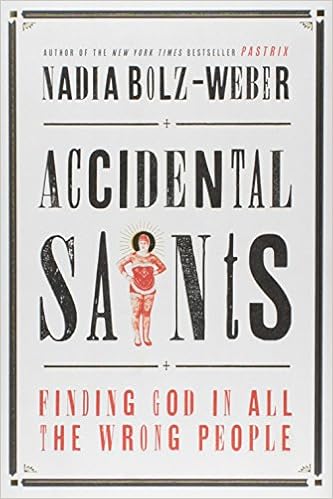
Title: Accidental Saints: Finding God in All the Wrong People
Author:Nadia Bolz-Weber
Genre: Nonfiction

Nadia Boltz-Weber's writing is raw and honest. She asks a lot of questions, and sometimes those questions don't have answers. There's no formula on how to live a perfect life or list of rules to follow in order to gain sainthood in this book. However, what the author does show us how to do is recognize the beauty in other people, even when it takes unconventional forms. I got to interview the author about this book (Englewood Review of Books, print edition).


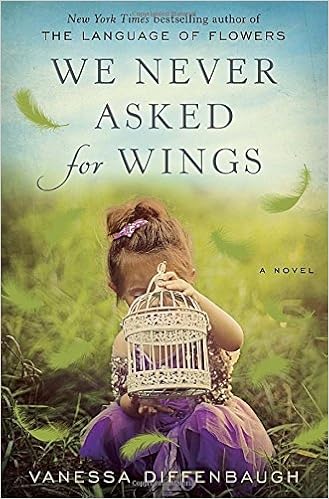
Title: We Never Asked for Wings
Author: Vanessa Diffenbaugh
Genre: Fiction

Diffenbaugh writes about individuals on the edge of society and makes them accessible to the mainstream. It's difficult not to become engaged with the characters the way that she writes them. Even when they make bad decisions, instead of judging these characters I felt myself cringing while filling with empathy for the heartaches that resulted. Well constructed and emotionally rich. If you loved The Language of Flowers you should definitely read this one. Be prepared for another bumpy ride that you will be glad you took.


Title: Walking on Water: Reflections on Faith and Art
Author: Madeline L’Engle
Genre: Nonfiction

This book is one of the best I've read for artists who also happen to have a strong religious faith. L'Engle approaches creativity as a natural response to being created in the image of The Creator. In fact, she explains that most children start out creative, but wander (or are trained) away from these activities. What I respected most was her assertion that art designed to evangelize tends to be come across as forced, and is often lower quality because of this.


Title: The God of Small Things
Author: Arundhati Roy
Genre: Fiction

The book is set in India and follows the lives of twins (a boy and a girl) through the early events that shaped them. It's a tale of childhood, innocence lost, and forbidden love The prose is sometimes filled with passages that convey both the bitterness and romance of childhood. Be forewarned: there is no shortage of loss in this book (it's a tragedy), but the writing is poetic.


Title: The Girl Who Could Not Dream
Author:Sarah Beth Durst
Genre: Children’s Fiction

A highly imaginative look at dreams, the importance of childhood friends, and learning to deal with fear. Although Sophie in unable to dream on her own, when she ingests the dreams of others the things in the dream become real. This is a great way to explore the line between reality and dreams and the importance of each. Durst write some great characters, including a lovable monster, a vain Unicorn/ Pegasus, and a sinister villain called "Mr. Nightmare." The story moves at a good pace and takes the reader on a few unexpected twists and turns.


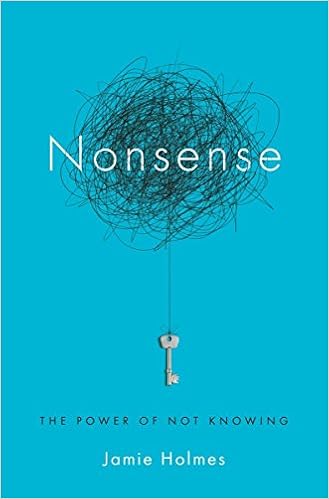
Title: Nonsense: The Power of Not Knowing
Author:Jamie Holmes
Genre: Nonfiction

This book brings together several different cognitive theories to help understand how different individuals deal with ambiguous information. While some individuals have a high need for context, others are more comfortable when new information doesn't neatly fit into their current understanding of the world. This is a great book for learning how to understand different points of view and how some individuals choose to interpret events differently from others.


Title: Little Man, What Now?
Author:Hans Fallada
Genre: Fiction
An interesting read that gives insight into what it was like to be a white collar worker in Berlin just prior to WWII. This is a fictional account of two newlyweds, but it should be noted that the author did extensive research on the subject and managed to portray an accurate picture of the struggles at the time. What makes the book so engaging is the humorous aspect that pervades the story - some critics have compared the main character to Charlie Chaplin's Little Tramp. A series of unfortunate events are consistently cushioned by the humor in the characters and plot line.


Title: Seeker
Author: Arwen Elys Dayton
Genre: Children’s Fiction
The best way to describe this book is as a modern tale of knighthood, with the added twist of vying for power and position. Seekers are a special group of individuals who are supposed to work for the good of humanity, but Quin quickly learns that not all the protectors of the truth are actually protecting it and some are out for personal gain.


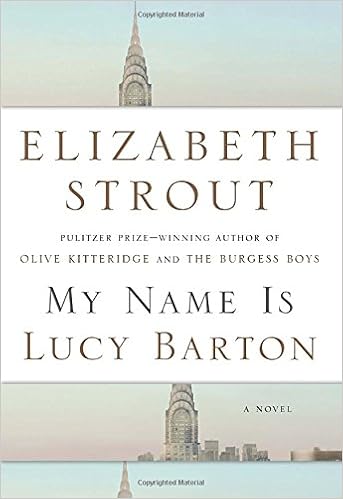
Title: My Name Is Lucy Barton
Author: Elizabeth Strout
Genre: Fiction

The story centers on a woman who is hospitalized for an illness, which is the point in time from which she begins to make sense of all the imperfect forms of love she's experienced in her life. Central to this insight is her relationship with her mother who comes to stay with her during those few days when the doctor is trying to figure out the cause of the illness. The writing is solid and the book does a great job of exploring the basic need for love, even in it's most broken forms.


If you see something that interests you, check out a few other reviews on Amazon or Goodreads to get a slightly different perspective and see if one of these could be the treasure from 2015 that you missed. Please don’t forget to come back and leave me a comment on how you liked the book!
Tuesday, March 31, 2015

How To Write a Book in 3 Easy Steps

I get asked a lot of questions about writing. One of the most common inquiries is from people who want to write a book but don't know how to do it. So I've come up with 3 easy steps for guidance.
1. Get a typewriter or computer with a word processor.
2. Vomit words onto a page.
3. Arrange the words so that they look appetizing.
Repeat steps 1 through 3 as needed until you have a novel length manuscript.

See how easy this is? Some people choose to ignore the third step, but I find this part to be the most critical. Good luck!

Monday, December 15, 2014

Best Gifts for Book Lovers

Tomorrow is the first day of Chanukah and we're only 10 days away from Christmas. Some of you may be in a panic about what to give the book lover in your life, so I've composed a list of gift ideas. Here we go:

A few general sites to look for gifts for book lovers are these:

Out of Print Clothing
This site has a lot more than clothing, although their t-shirts of vintage book covers are really cool (I own several). They also carry a wide range of book accessories and book themes objects, such as coasters, tote bags, and jewelry. My favorite pair of socks came from this site!

The Literary Gift Company
The name says it all - this is all literary themed merchandise. There are coffee cups, posters, calendars and games. You can even find books made into other things.

Not On The High Street
This site also has posters, calendars, jewelry, framed book pages, bookends, bookmarks, and other literary themed merchandise. Something unique they carry is a flower made out of book pages.

Paddywax Candles
This candle company has a line of Library candles that are named after famous authors and contain ingredients from their lives or works of literature. IN fact, I'm burning Charles Dickens as I write this (it has a holiday scent a la "A Christmas Carol.").

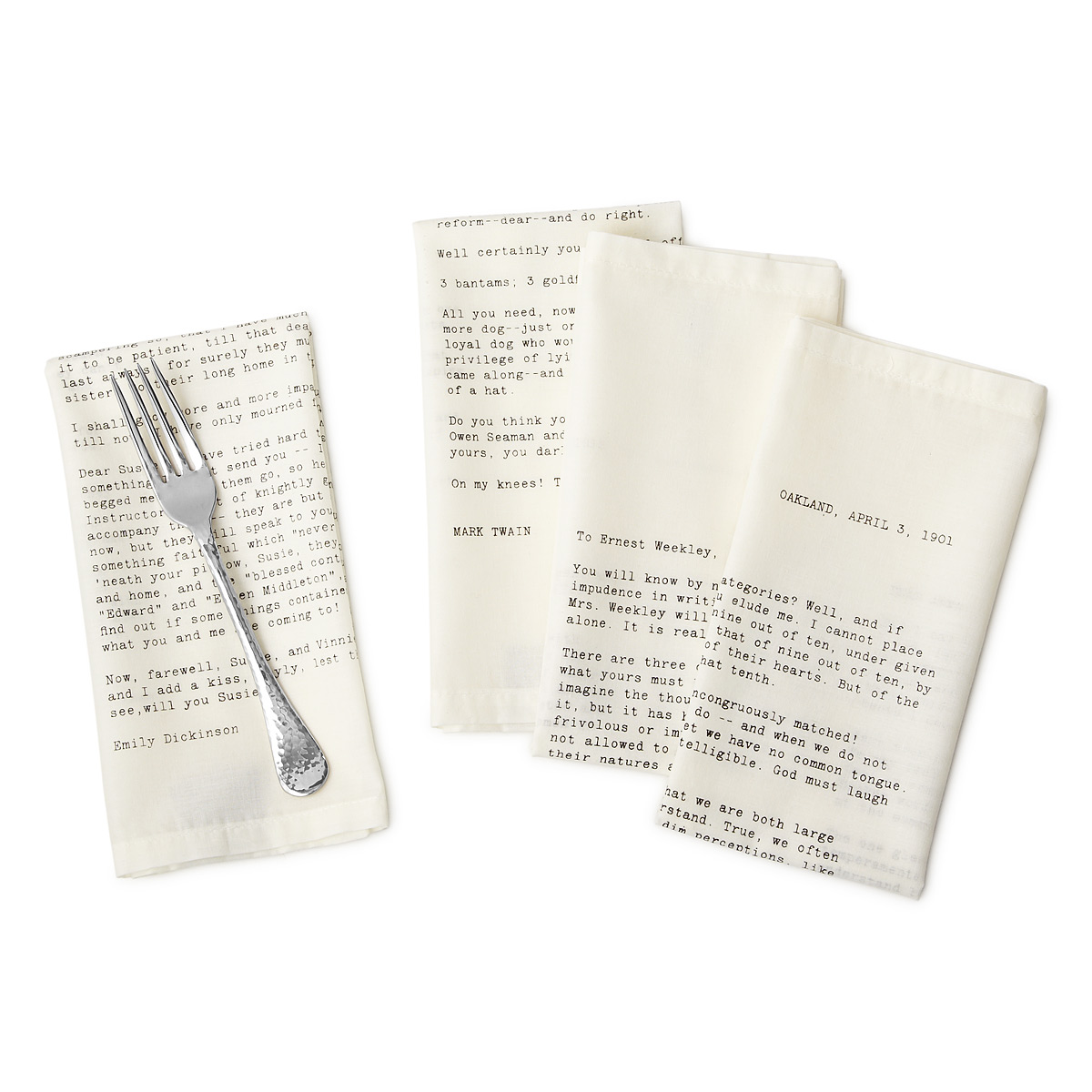
Uncommon Goods has a list of literary gifts on their site. I particularly like the love letter napkins.


Now for a few other specific items that I think are cool. Many of these come from Etsy, which is a great place to shop for unique gifts, and if you browse there long enough you're bound to find something for your favorite book lover (or for yourself).

Amazon has a candle that smells like a new book.


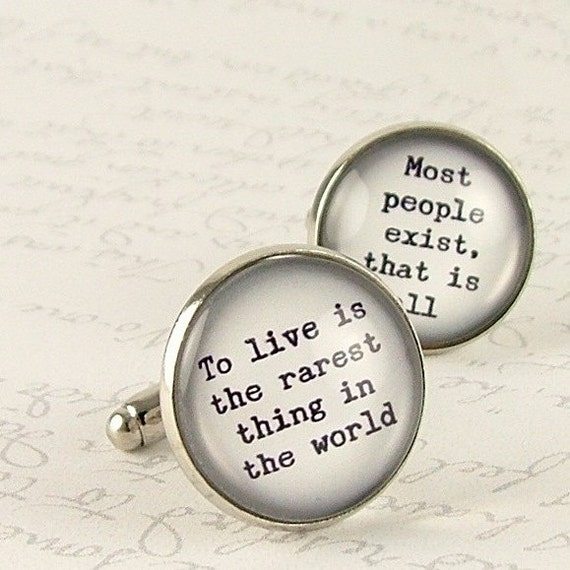
How about some Oscar Wilde Cufflinks?


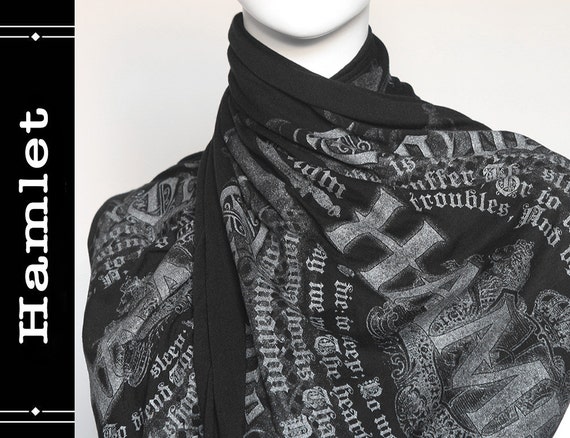
There are two site that have some nice literary scarves. They can be found here and here. Each site has a slightly different style and selection.


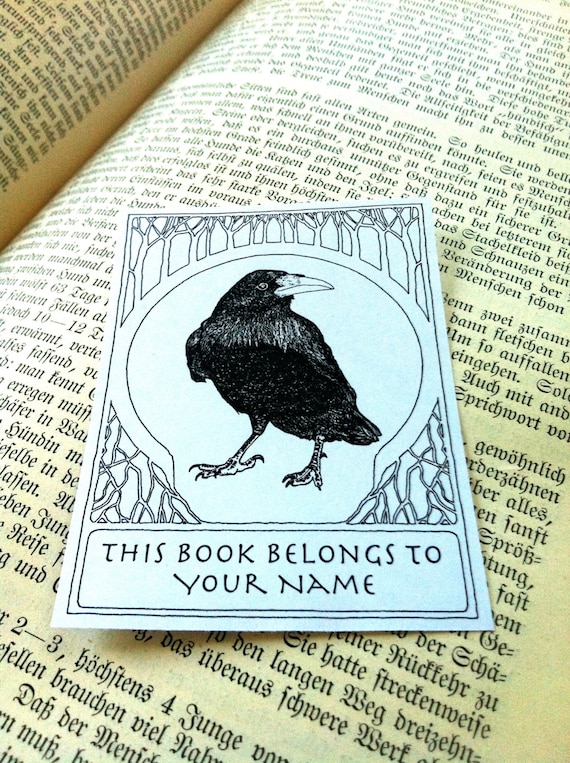
Another site on Etsy offers custom bookplates. These come in a variety of styles, including a raven.


How about some wearable literature that includes hats and jewelry as well as scarves.


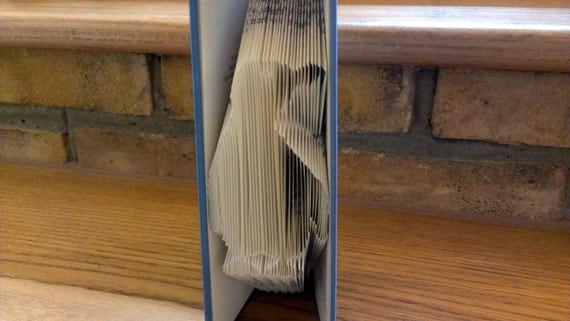
Do you know a crafty book lover who would enjoy folding books into art? This site offers patterns.


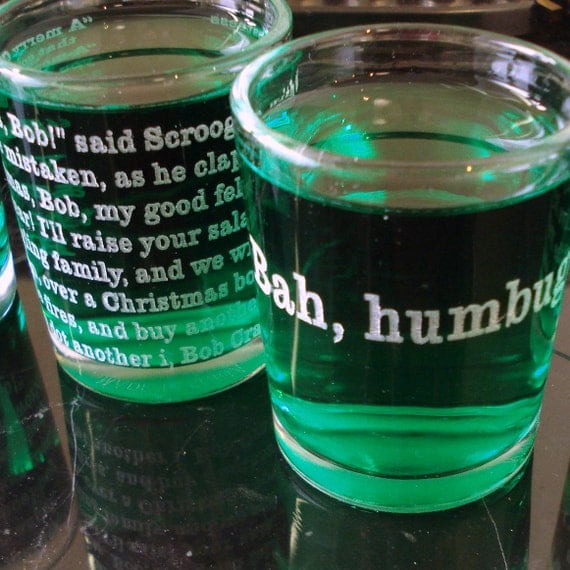
Or how about some Dickens themed shot glasses for drinking up your Christmas cheer?


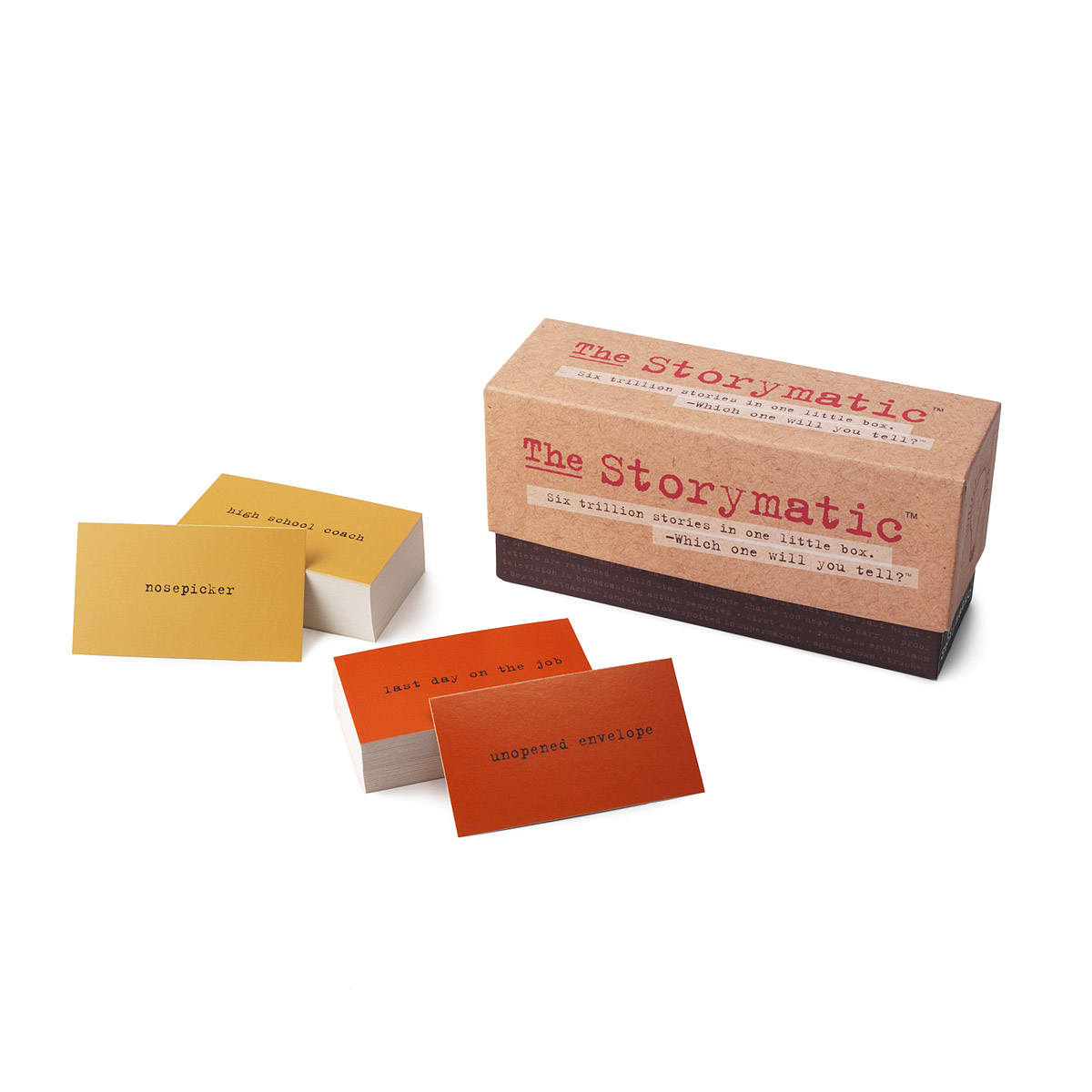
Or maybe a literary themed game would be fun?


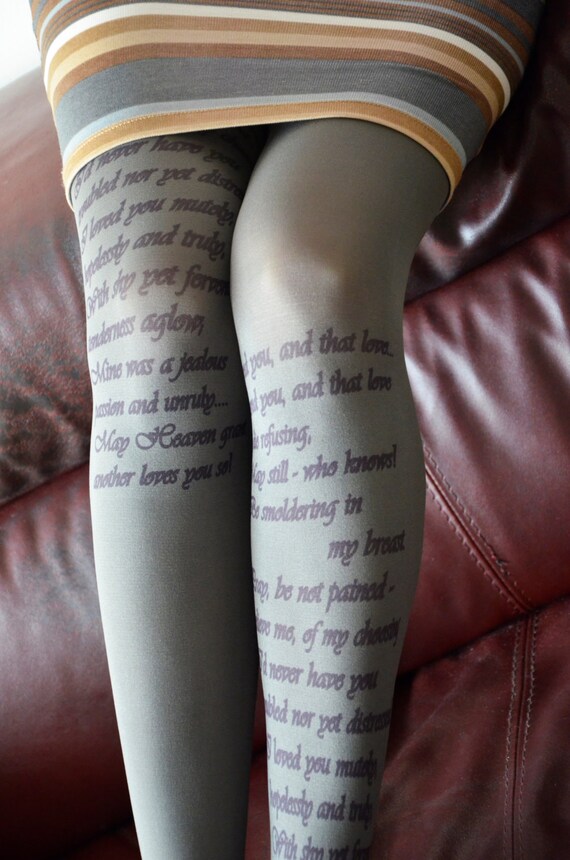
I absolutely love these (and own a pair!) poetry themed tights! If you're book lover is also a poet, there is an option for custom tights.


This Etsy shop has vintage postcards with original poetry typed on them. This was done by the artist who illustrated my Kingdom Wars series of books, so I'm particularly partial to the work.


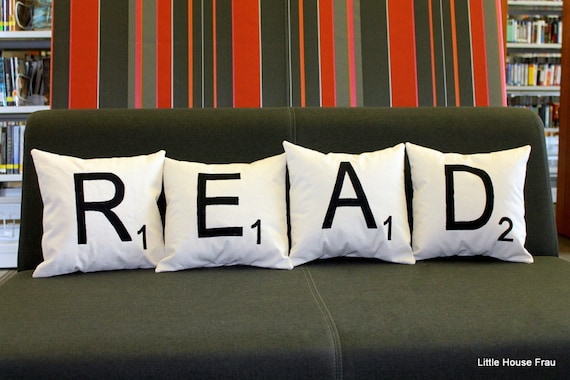
You can also find throw pillows of scrabble letters and spell out the word(s) of your choice. I'd like ot have these all over my house so I could change the words and feel as if I live inside of a book!


So these have been a few ideas - there are more out there. If nothing here suits your needs, I recommend searching Etsy for favorite authors or specific items. Good luck and happy holidays!

Thursday, October 9, 2014

Critics vs Readers: Which Type of Review Is Better?

There’s one primary difference between a review written by the average reader and one written by a professional book reviewer: one is an opinion (often a subjective one), and the other uses external predefined standards to measure the work.

Both types of reviews are valid.
Both types of reviews are useful to readers.

Different Criteria

Professional reviewers use standards, similar to the way a teacher grades a test. They’re looking at things such as plot structure and use of literary devices. Readers tend to rate books based on their experience while reading. For example, if the book was a mystery readers might base their ratings on the cleverness of the puzzle to be solved. A romance book may be valued for the intensity of the love scenes, and plot flaws may be ignored if they contribute to making those love scenes happen.

These different sets of criteria are why the two groups often disagree in their ratings of the same book. In fact, I’ve seen a  number of cases where a professional reviewer praised the use of a literary device and the general audience criticized the piece of work for the same technique (finding repetition boring and annoying, for example). I like to think of professional reviewers as examining the architecture of the book, while typical readers tend to rate a book based on how the story made them feel.

As far as books are concerned, there’s the integrity of the piece as a work of art, and then there’s the appeal of the book to the audience. The paradox is that critical acclaim and mass appeal often don’t go together in publishing. The horror film genre is a classic example of this dichotomy between critics and audience. Film critics tend to give low ratings to most of the movies in this genre. If you’ve ever watched one of these films, you understand why: the plots tend to be poorly constructed and unbelievable. Horror fans, however, know this about the films, but they’re going to see them for the rush they feel during the experience. Horror fans frequently ignore critics altogether.

So, Who Should Readers Listen To?

The first step in overcoming this discrepancy between critical and reader reviews is to acknowledge that it exists. There may be times that you agree with the critics, other times that your opinion agrees with the pubic, and there will also be those few times when the critics and public both agree.

Next, treat information from both types of reviewers in the same way. They're both reviewers, they just have different sets of criteria. Therefore, I often advise people to find one or two of their favorite books and see if a reviewer has read them. If the reviewer hasn't read them, then it’s fairly safe to assume that the person has different taste in literature and this isn’t a reviewer who would have valuable input for you. However, if the reviewer has read the book, check to see if their opinion agrees with yours. If it does, then chances are you will agree on new books, as well. If the opinion differs, then look for other reviewers and see what those people have to say about the book. Eventually you will find someone else who has taste similar enough to yours that you can trust their judgement. You may also find a few who have such different taste from yours that when they like a book you know you'll hate it.

In the end, the average person is looking for a book to enjoy. Both professional and reader reviews can help you to find one. In fact, the best books often have the critics and audience in agreement on how good they are. But when critics and other reviewers disagree, find the people who have similar taste to yours on other titles and trust their judgements.

Thursday, February 20, 2014

On Negative Reviews

Very few people are familiar with the name of Rufus Griswold. On the other hand, there are also very few people who don’t know the name Edgar Allan Poe. The irony is that much of what the average person “knows” about Poe was written by Griswold and these fictions, which appear to have been intended to harm Poe’s reputation and destroy his literary legacy, only served to increase Poe’s popularity. The dark descriptions Griswold wrote about Poe being an individual of poor character actually drew more interest in Poe’s work. This strategy of slander backfired and today most people know Poe’s name and literary work while Griswold is all but forgotten.

Certainly, there are a lot of mysteries surrounding Poe and his death, but the biography Griswold wrote adds another layer of darkness that further obscures the truth.  In fact, we can’t even be certain that Poe would disapprove of the false accusations, given how much it has brought attention to his own work. However, it brings to mind some of the reviews that I’ve seen authors giving other authors on retail and book related sites. It’s not uncommon for some authors to give low ratings or write unfavorable reviews for books that may compete with their own books for readers or market share.

Like most literature enthusiasts, I enjoy some books more than others. However, if I read a book that I don’t like, I simply don’t review it. Just because a book doesn't appeal to me doesn't mean that it was a bad book. In fact, more often than not, the reason I don’t enjoy a book is because it’s not relevant to me at the point in my life in which I read it. That doesn’t mean that the book would never be relevant or didn’t have the potential to take on meaning for me at a different point in my life. A reader’s experience is subjective and may be completely irrelevant to the quality of a book. Therefore, it’s important to explain why a book appealed to you in a positive review and carefully choose your words if you decide to write a negative review. But even well written negative reviews can reflect poorly on the reviewer.

Negative reviews often tell you more about the reviewer than the book being reviewed. Dislike for something that is strong enough for a reviewer to take the time to record it publicly tells you what’s important to the reviewer or where the reviewer struggles. Negative reviews are also frequently emotionally charged, thereby giving hints to the reviewer’s real issues. These are often unrelated to the book and more likely related to the subject matter or something about the author that reminds the reviewer of someone else. In the case of Griswold and Poe, Griswold’s real issue appears to be one of jealousy.

This brings about another important issue of authors writing negative reviews of another author’s work. Remember that your criticism isn’t simply evaluating the author’s writing: it is actually far more critical of the publisher’s and editor’s work. It’s the editors who determine if a book is well written enough to be published and who are also responsible for catching many of the issues that you may be criticizing. I’ve spoken with more than one editor who has said that they refuse to work with authors who write scathing reviews of other authors’ works because they feel that these individuals tend to have difficult personalities. So before writing a negative review, think twice about how it may reflect upon you. You could hurt your own chances of eventually getting published because, as one editor put it: “No one wants to work with a know it all, and people who constantly criticize others give the impression that they think they know everything. I don’t have time to deal with someone like that.”

Today when I read strongly negative reviews I’m often reminded of Poe and think, “something that evokes so much hatred must be worth reading.” Hatred isn’t a neutral reaction. In fact, some people argue that hatred is not the opposite of love and that indifference would be the true contrasting reaction. More often than not, truly bad books are simply ignored by the reading public because they aren’t recommended. It stands to reason that if someone takes the time to write a negative review in order to deter others from reading the book, that it was done for a reason.

Hatred is counterproductive on so many levels, and allowing your disdain for someone else’s writing could cause you to lose readers. Most people feel that individuals who need to push others down in order to lift themselves up probably don’t need to be elevated at all because they’re not demonstrating that they have anything worthwhile to say. After all, the main purpose of writing is to say something that’s worth reading. So instead of writing negative reviews, try expressing appreciation for the work of others that you do enjoy. This can help you to gain a larger audience because potential readers will better understand your work by the literary company you keep.

Tuesday, January 14, 2014

Book Review: The Elements of Eloquence

Amazon


I read a lot, but it’s rare that I come across a book that I just can not put down. The Elements of Eloquence: How To Turn The Perfect English Phrase by Mark Forsyth  was one of those books. I read the whole thing in less than 24 hours, deftly ignoring deadlines, emails, and people screaming in my face in order to accomplish this. It was worth it.

As a writer, I’m interested in the technical information in the book - how some of the best authors in history utilized these building blocks called the figures of rhetoric in their craft. The author doesn’t explain every figure in existence — just some of the ones more commonly used. What’s great about this book is how the author provides specific examples from classic literature, and those frequently come from the works of the Bard, himself. What better example could we have?

Aside from the fascinating content, what makes this book unique is the engaging manner in which it’s written. Forsyth makes learning about the figures of speech fun and entertaining. He cracks jokes and doesn’t take himself or the language too seriously. Some of my favorite quotes from the book:

“When healthy people fall in love, they buy a bunch of flowers or an engagement ring and go Do Something About It. When poets fall in love, they make a list of their loved one’s body parts and attach similes to them.”

“Polyptoton remains incorrigibly unsexy.”

“Lawyers are like Cole Porter and Alfred Lord Tennyson with a blender.”

“I would no more write without art because I didn’t need to, than I would wander outdoors naked just because it was warm enough.”

If you’re a word nerd, purveyor of prose, or literature lover, such as myself, then you should check out this book. Note: I just used several of the elements of rhetoric in that last sentence, but I won’t tell you which ones or how many. You’ll have to read the book for yourself to figure it out!

If you know a writer or English teacher, this book would make a great gift. If you fit into one of these categories or you're just a word junkie like me, then buy it for yourself.

Thursday, January 17, 2013

Don't Fear the Reading


I recently attended an event where I heard one of the speakers say that he didn’t read any fiction books if he didn’t like the author’s message. I realize that we all have different reasons for why we read the things we read, but I lose respect for people who tell me they don’t read a particular author because they disagree with the message.

One of the key issues with this statement is that there is no way to know an author’s message until you’ve read the book. So there’s an underlying issue that this individual doesn’t want to listen to viewpoints different from his own. If his primary desire is to be closed minded, then why is he reading at all? Reading opens up worlds. If your desire is to enclose your world as much as possible, then opening a book is the wrong place to go.

Just because an author has different religious or political beliefs doesn’t mean that the author can’t tell a story or has nothing valuable to say. If the author views the world differently, it can get us thinking about our own views in a way that strengthens and refines them. This is a good thing.

The Murakami quote in the meme at the top of this post is one of my favorites. Reading stretches the mind and opens up worlds. Reading books from different perspectives is an artistic dialog between the author and reader. No one has to be right or wrong. It’s really about the conversation. And the more we converse, the more potential we have to make the world we live in a better pace.


So don't be afraid to read about different perspectives. You may even discover new things about yourself.

Wednesday, November 7, 2012

Skinny Dipping In Daylight - Book Review

 People who know me well know that words are my drug of choice. I have other addictions, such as good coffee, red wine and visually stunning movies, but I could walk away from any of these, with the exception of well-placed words. I have deep appreciation for well crafted ideas, especially when these ideas are expressed verbally. Skinny Dipping in Daylight by Cory Basil is a beautifully crafted work that will appeal to readers like me.

The title reflects the raw honesty of the book’s content. The pieces are thoughtful and accurately reflect the different facets of human experience: Love, humor, pain, struggle, falling and getting back up again. Poetry has rhythm and good poetry reflects the rhythm of life, like Skinny Dipping in Daylight.

Even in the prose sections Cory has a very lyrical style of writing, and yet it often contains pithy aspects or whimsical elements that keep me engaged. The words he chooses eloquently support his message without clouding it or overtaking it and that’s what makes his writing so appealing.

I could write paragraphs about the book to describe the writing and illustrations, but I think your time would be better spent reading it for yourself. Check out Cory’s description in the video trailer and then go buy a copy. Better yet, read it with friends or a reading group so you can talk about it with someone else. The discussion time will be well-spent.

Lastly, for those of you unfamiliar with Cory’s artwork, please take the time to check out the links below. He is as imaginative as he is articulate. In fact, I was so impressed with his work that I own several of his prints and also hired him to do the cover for my next book.

Related Links:

Cory’s Website

Cory's Artwork on Etsy

Facebook

Twitter

If you live in Nashville, please visit The Frothy Monkey coffeehouse on 12th Ave. and check out Cory’s original art work which will be there on display from December 1 through January 31, 2013. But get there before everything’s purchased and there’s nothing left to see.


Note: My review was based on a free, advanced-review copy of the book.

Thursday, October 13, 2011

Bedtime Stories for Dogs and Cats


Just in time for the Southern Festival of Books this weekend... two NEW eBooks have been released!


A book of stories, poems, fables, and essays written by dogs for dogs.  Story topics range from mythology and magic to “tails” of misfortune, adventure, and joy.


A book of stories, fables, and essays written by cats for cats.  Story topics range from cat mythology to “tails” of adventure and magic.


Discover how much fun you can have reading to your pets!  The two books have some unique stories and some that are similar but told from a different perspective (either cat or dog).  The print version will be available in two weeks and will contain both books bound together. 
Please share this post with your friends.  A portion of the proceeds from the sale of these books will be donated to no-kill animal shelters.


Tuesday, October 4, 2011

Poetic Justice?


I recently posted the above photo on Facebook.  I admit that I stole it from someone else on Facebook (my buddy Nick) and don’t know the original author.  However, I thought it was the funniest thing I had ever seen and a work of genius.  People who love books seem to enjoy it, anyway.
Now here’s the funnier part: 
Shortly after I posted this photo and laughed my head off I received an email that MTV has licensed two of my band’s songs.  What this means is that MTV can use the songs in any of their TV shows, including Jersey Shore.  If this happens it would be an excellent example of poetic justice.  One, of course, that I would encourage as it involves royalty checks made out to yours truly.
For those of you unfamiliar with poetic justice, it’s a literary device that involves irony.  In my case, I poked fun at a TV show and then found out that I may now serve to gain financially from the show (or at the very least from the show’s network) making me something of a hypocrite.  Now that’s ironic. And funny.
By the way, I still think the photo is hilarious.

Tuesday, May 17, 2011

The Story Behind the Stories

For those of you who don't know, I just released a collection of three short stories called "Leftover Shorts."

Leftover Shorts was named that way because it really is a collection of leftovers: these are three stories I wrote because I liked the concepts behind them.  None of these stories fits neatly into the two collections I’m currently working on, so they’re “Leftovers.”  That doesn’t mean that I love these children any less but, like all strange relatives, they may need a little explaining.  So here’s how I came about the idea for these three oddballs...
The Marshmallow War
Too often I see experienced workers and their body of institutional knowledge being ignored within organizations.  So I had to make fun of it.  I set the story in a Marshmallow company where the inexperienced new manager thinks that if a little of something is good (fluffiness) then a lot must be even better.  This story is about how the mature workers resolve their situation through some not so mature (yet creative) means.  When I re-read this story I feel like it has a slight Kurt Vonnegut feel to it, so I may have been reading some of his work when I was writing it.  Let me know if you agree with the influence or if I’m imagining it.
Peripheral Witches
I was definitely in a Tim Burton mood when I put this together.  The premise is that we see all kinds of evil in something that we don’t fully examine - in other words, when we don’t look at it head on.  The woman in the story sees witches in her peripheral vision.  The images vanish whenever she looks directly at them and she begins to think that she’s going crazy.  It doesn’t occur to her until the end that maybe she’s projecting her own bitterness onto these things.  The story is set during Prom time (which it currently is right now!) because Proms have a very fairy tale nature about them.  I thought it would be fun to weave this theme together with the fairy tale of the witches that the main character is creating in her mind.
Parson’s Song
There is an old folk tune called “MacPherson’s Lament.”  The legend states that the criminal MacPerson composed his own lament (song of mourning) on the gallows right before he was to be hanged.  I’ve updated the setting from old Scotland and put it in the more recent South.  The main character, Billy Parson, is fodder for small town gossip and superstition based local beliefs surrounding when he was born. Billy, himself doesn't know how to interpret or whether to believe the superstition, but it still impacts the choices he makes in life.
So that’s the story behind the stories.  Now please go purchase them for the low, low price of 99 cents.  If you like them, recommend them to a friend.  If you dislike them, recommend them to an enemy.  Either way I’d appreciate a referral.  Thank you!