“Write the kind of story you would like to read. People will give you all sorts of advice about writing, but if you are not writing something you like, no one else will like it either.”
~ Meg Cabot
The reason that fiction is more interesting than any other form of literature, to those who really like to study people, is that in fiction the author can really tell the truth without humiliating himself.”
~ Eleanor Roosevelt
“You can't wait for inspiration. You have to go after it with a club.”
~ Jack London
“I would advise anyone who aspires to a writing career that before developing his talent he would be wise to develop a thick hide.”
~ Harper Lee
“And by the way, everything in life is writable about if you have the outgoing guts to do it, and the imagination to improvise. The worst enemy to creativity is self-doubt.”
~ Sylvia Plath
“The greatest part of a writer’s time is spent in reading, in order to write; a man will turn over half a library to make one book.”
~ Samuel Johnson
“Write while the heat is in you. … The writer who postpones the recording of his thoughts uses an iron which has cooled to burn a hole with.”
~ Henry David Thoreau
“No tears in the writer, no tears in the reader. No surprise in the writer, no surprise in the reader.”
~ Robert Frost
“Keep a small can of WD-40 on your desk~away from any open flames~to remind yourself that if you don’t write daily, you will get rusty.”
~George Singleton
“Those who find ugly meanings in beautiful things are corrupt without being charming. This is a fault. Those who find beautiful meanings in beautiful things are the cultivated. For these there is hope. They are the elect to whom beautiful things mean only Beauty. There is no such thing as a moral or an immoral book. Books are well written, or badly written. That is all.”
~ Oscar Wilde
“Cheat your landlord if you can and must, but do not try to shortchange the Muse. It cannot be done. You can’t fake quality any more than you can fake a good meal.”
~ William S. Burroughs
“You must stay drunk on writing so reality cannot destroy you.”
~ Ray Bradbury
“You should write because you love the shape of stories and sentences and the creation of different words on a page. Writing comes from reading, and reading is the finest teacher of how to write.”
~ Annie Proulx
“Writing is like sex. First you do it for love, then you do it for your friends, and then you do it for money.”
~ Virginia Woolf
“We have to continually be jumping off cliffs and developing our wings on the way down.”
~ Kurt Vonnegut
“Start writing, no matter what. The water does not flow until the faucet is turned on.”
~ Louis L’Amour
“I write to give myself strength. I write to be the characters that I am not. I write to explore all the things I'm afraid of. ”
~ Joss Whedon
“We are all apprentices in a craft where no one ever becomes a master.”
~Ernest Hemingway
“If my doctor told me I had only six minutes to live, I wouldn't brood. I'd type a little faster.”
~ Isaac Asimov
“That's what fiction is for. It's for getting at the truth when the truth isn't sufficient for the truth.”
~ Tim O’Brien
Showing posts with label writing. Show all posts
Showing posts with label writing. Show all posts
Tuesday, December 15, 2015
20 Quotes About Writing
I collect quotes. I have notebooks filled with them. So I dug through the secret place in my sock drawer where I keep all these quote-filled notebooks and dug up a list of 20 about writing and ficiton. Here they are.


Thursday, October 15, 2015
Tips of Writing a Good Fantasy Story
In order for a fantasy world to be believable and accepted by the audience, there are a few things an author should keep in mind when writing in this genre. I’ve compiled these into two short lists of what to do (DO) and what not to do (DON’T).
DO
Use the characters to move the story forward. You can add situations that force them to grow or change or show their true colors, but don’t rely on things outside of the story to move it forward. Situations are generally boring to readers - but how someone reacts in a situation is infinitely more interesting.
Put characters in situations that challenge them. I paired Kelsey with Silence in the Orphanage of Miracles because she lacked patience. Putting her with a mute also helped her to learn more about herself as she watched him interact successfully with others.
Look to everyday life to inspire you and then imagine the same situations and experiences in another world. You may be writing in a fantasy world, but there are elements of the human experience that don’t change - such as the concepts of love, friendship, family, revenge, and war. These elements that are common to our world connect the reader to your story.
DONT:
Make characters say or do anything that goes against who they are. Your characters have identities of their own outside of you. You can control them no more than you can control your own children. Sure, you can provide them guidance and put them in situations that bring out the good or bad in them, but you can not suddenly make a coward have confidence or turn a basically good person evil without a strong motivation to do so (and that motivation needs to be built carefully).
Don’t rely on magic to move the story forward. The story should still be character driven, because this is how your audience connects to your world. See point number 3 above under “DO” for more information.
Don’t make objects or animals talk just for fun. If you anthropomorphize something, it needs a reason and should be part of the overall story plot and structure. Objects generally serve a purpose and animals have specific characteristics that should be included in the story line. For example, I made death a fox in my books because death is cunning and often sneaks up on people. A fox also shares those qualities.
These aren’t hard and fast rules, and no one likes to break rules more than I do. So feel free to break them, but to do so successfully you’ll need to always keep the reader in mind. The reader is, after all, your primary reason for publishing. So make sure that elements of the story don’t cause them to suddenly ask, “Where did that come from?” Our job as writers is to guide the reader safely through our realms without questioning whether or not it could actually exist. We help them to believe in it.
DO
Use the characters to move the story forward. You can add situations that force them to grow or change or show their true colors, but don’t rely on things outside of the story to move it forward. Situations are generally boring to readers - but how someone reacts in a situation is infinitely more interesting.
Put characters in situations that challenge them. I paired Kelsey with Silence in the Orphanage of Miracles because she lacked patience. Putting her with a mute also helped her to learn more about herself as she watched him interact successfully with others.
Look to everyday life to inspire you and then imagine the same situations and experiences in another world. You may be writing in a fantasy world, but there are elements of the human experience that don’t change - such as the concepts of love, friendship, family, revenge, and war. These elements that are common to our world connect the reader to your story.
DONT:
Make characters say or do anything that goes against who they are. Your characters have identities of their own outside of you. You can control them no more than you can control your own children. Sure, you can provide them guidance and put them in situations that bring out the good or bad in them, but you can not suddenly make a coward have confidence or turn a basically good person evil without a strong motivation to do so (and that motivation needs to be built carefully).
Don’t rely on magic to move the story forward. The story should still be character driven, because this is how your audience connects to your world. See point number 3 above under “DO” for more information.
Don’t make objects or animals talk just for fun. If you anthropomorphize something, it needs a reason and should be part of the overall story plot and structure. Objects generally serve a purpose and animals have specific characteristics that should be included in the story line. For example, I made death a fox in my books because death is cunning and often sneaks up on people. A fox also shares those qualities.
These aren’t hard and fast rules, and no one likes to break rules more than I do. So feel free to break them, but to do so successfully you’ll need to always keep the reader in mind. The reader is, after all, your primary reason for publishing. So make sure that elements of the story don’t cause them to suddenly ask, “Where did that come from?” Our job as writers is to guide the reader safely through our realms without questioning whether or not it could actually exist. We help them to believe in it.
Wednesday, August 12, 2015
Sonic Highways: A Lesson in Story Telling

In the DVDs, each episode shows the band arriving in a city, learning about the musical influences, and then recording a song that exudes the flavor of that space. Each piece usually incorporates a local guest recording artists (such as Joe Walsh in California).
Great music. But how is this related to literature or writing?
There’s a lot we, as writers, can learn from the way Dave Grohl creates his art. First of all, the whole concept of the project stresses the importance of setting. There are things that characters will often do in one location but not in others. As a writer, your story is always a mixture of the people involved and the place they’re in, and what took place in the past in order to create the current environment. A story’s setting isn’t just a location: it’s a place in time that’s the culmination of all that’s come before in that space.
The setting in which you place a story influences actions and sets mood. It’s the same in music as it is in literature as it is in life. What Dave Grohl is tapping into is the subtle differences in culture between cities on the same continent. He's also showing the impact of time on these things. Cities have personalities and atmospheres that have evolved in a particular manner.
Think about the setting in your writing almost as if it’s another character, because it’s just as important to moving the plot along. If you watch these DVDs, notice how different cities produce different musical sounds because of the unique mixture of people who live there or the kinds of struggles and achievements that took place in those locations. These nuances provide the rich texture and context for a story, and these are the kinds of details that bring a story to life.
The tag line on the DVD set is “Every city has a sound. Every sound has a story” and these DVDs tell those stories well. Highly recommended viewing.
Tuesday, March 31, 2015
How To Write a Book in 3 Easy Steps
I get asked a lot of questions about writing. One of the most common inquiries is from people who want to write a book but don't know how to do it. So I've come up with 3 easy steps for guidance.
See how easy this is? Some people choose to ignore the third step, but I find this part to be the most critical. Good luck!
1. Get a typewriter or computer with a word processor.Repeat steps 1 through 3 as needed until you have a novel length manuscript.
2. Vomit words onto a page.
3. Arrange the words so that they look appetizing.
See how easy this is? Some people choose to ignore the third step, but I find this part to be the most critical. Good luck!
Thursday, January 15, 2015
Consider The Reader: What Your Audience Wants
Last week I talked about defining your audience. That's one of the first steps in marketing your book. But once you’ve identified who may want to read your book, the next step is to define what they want. There are two parts of this to consider, but both pieces work together. The two parts are what the audience wants in terms of content and what they want in terms of marketing/ outreach.
What experience does the reader expect from a book in your genre? Now take a look at your work and determine if you’re delivering that. For example, detective stories need to contain a mystery with a solution that’s cleaver, difficult to see from the outset, and when the reader reflects back the person should be able to see that all the necessary clues were present within the story.
If you write adventure stories, does your book contain enough thrilling moments to get the reader’s heart racing? If this is an instructional book, does it provide enough detail so that the reader can build, make, or accomplish whatever you’re telling them that they can? If your book doesn’t fit into any genre, then you may be setting it up to disappoint readers because they’re coming in with unknown expectations. If you don’t know what the reader wants, it can be very difficult to deliver successfully. So make sure that your books include enough of whatever the key elements of your genre may be. Not only are readers more satisfied when you deliver on their expectations (which helps with reviews), but now that you’ve identified those elements it will be much easier to write advertising copy because those are the points you want to emphasize when you tell readers about your book.
Secondly, look at marketing expectations within your genre. Some genres have readers who prefer ebooks instead of physical books (or vice versa). This is important if you’re planning a promotional giveaway. Make sure that the book format matches reader preference. If it doesn't, the giveaway winners may never read it.
Also take a look at the way your books are presented for sale. Do your readers like bundles (several books sold together at discount) so they feel as if they’re getting a better deal? Do they enjoy books that are part of a series? Are short stories preferred over novels? What is the preferred length of a novel (60k words? 100k words?). It may seem silly to a writer who just wants to tell a story, but when a reader expects a short read and sees a 130k novel, they’ll pass on it and choose something else that matches their expectations.
I’d like to conclude by clarifying that thinking about the audience doesn’t mean that you allow the readers to tell you how to write your books. It has more to do with remembering that writing is communication and should be treated that way. If you don’t listen to what your readers have to tell you concerning what they want and how to reach them, then success as an author may be very difficult to find.
Content
Every genre carries different reader expectations. If you can deliver those, then your book is more likely to be successful, and readers are more likely to spread the word. Of course there are some genre requirements for all books (solid writing, likable characters, etc), but what I’m talking about here are the things that draw specific readers to that particular type of book.What experience does the reader expect from a book in your genre? Now take a look at your work and determine if you’re delivering that. For example, detective stories need to contain a mystery with a solution that’s cleaver, difficult to see from the outset, and when the reader reflects back the person should be able to see that all the necessary clues were present within the story.
If you write adventure stories, does your book contain enough thrilling moments to get the reader’s heart racing? If this is an instructional book, does it provide enough detail so that the reader can build, make, or accomplish whatever you’re telling them that they can? If your book doesn’t fit into any genre, then you may be setting it up to disappoint readers because they’re coming in with unknown expectations. If you don’t know what the reader wants, it can be very difficult to deliver successfully. So make sure that your books include enough of whatever the key elements of your genre may be. Not only are readers more satisfied when you deliver on their expectations (which helps with reviews), but now that you’ve identified those elements it will be much easier to write advertising copy because those are the points you want to emphasize when you tell readers about your book.
Marketing
First of all, let me state the obvious: you need to meet your audience where they are, and don’t expect them to come to you. If you write graphic novels, you should be at places like Comic Con. If you write cookbooks, you should be advertising in cooking magazines or looking for opportunities to speak at home shows or other events that highlight culinary related topics. If you write fiction, you should be on sites like Goodreads and Shelfari.Secondly, look at marketing expectations within your genre. Some genres have readers who prefer ebooks instead of physical books (or vice versa). This is important if you’re planning a promotional giveaway. Make sure that the book format matches reader preference. If it doesn't, the giveaway winners may never read it.
Also take a look at the way your books are presented for sale. Do your readers like bundles (several books sold together at discount) so they feel as if they’re getting a better deal? Do they enjoy books that are part of a series? Are short stories preferred over novels? What is the preferred length of a novel (60k words? 100k words?). It may seem silly to a writer who just wants to tell a story, but when a reader expects a short read and sees a 130k novel, they’ll pass on it and choose something else that matches their expectations.
I’d like to conclude by clarifying that thinking about the audience doesn’t mean that you allow the readers to tell you how to write your books. It has more to do with remembering that writing is communication and should be treated that way. If you don’t listen to what your readers have to tell you concerning what they want and how to reach them, then success as an author may be very difficult to find.
Tuesday, May 20, 2014
Where Do You Get Your Ideas From?
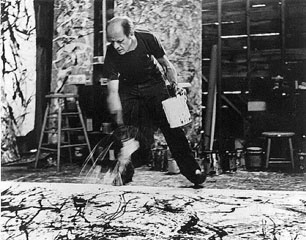
"Where do you get your ideas from?" has to be one of the most common questions I’m asked. I also suspect that many other writers and artists get asked this question or something similar.
First of all, it may be useful to consider that those of us who are creative individuals are not linear thinkers. The truth is, that we have a swimming pool of ideas and there are a lot of things floating around in our brains. Research has shown that creative types tend to make connections that the general population doesn’t see because the average person files information into rigid categories.
My guess (and I can’t say for sure, because I’m not the person who asks this question) is that some people believe there’s a formula for creativity. However, when things become formulaic they tend to be more predictable and therefore less creative. So showing a diagram that explains X leads to Y leads to Z means that the idea was logical in origin and not creative. I think this is why creative individuals have a difficult time answering the question. If there's a formula or rule for creativity, it's that you need to break formulas and rules in order to come up with something that's not predictable.
Sure, there are times when I can say that I read a book or saw a painting that started an idea germinating in my mind. But then that seed grows and there are so many other things fertilizing that idea and some of the fertilizer is decades old. It makes it difficult to specifically state the source.
So if you want to know where my ideas come from, here’s a list of what’s swimming in the pool of my mind from which I draw:
Life
Literature (I read a lot and always have)
People (both personal interactions as well as generic people watching )
Art (paintings, photography, dance, music, etc.)
There are many mothers of invention. In fact, my brain is like the Room of Requirement in the Harry Potter books. I’m not usually short on ideas - just on time to develop them.
Thursday, February 20, 2014
On Negative Reviews
Very few people are familiar with the name of Rufus Griswold. On the other hand, there are also very few people who don’t know the name Edgar Allan Poe. The irony is that much of what the average person “knows” about Poe was written by Griswold and these fictions, which appear to have been intended to harm Poe’s reputation and destroy his literary legacy, only served to increase Poe’s popularity. The dark descriptions Griswold wrote about Poe being an individual of poor character actually drew more interest in Poe’s work. This strategy of slander backfired and today most people know Poe’s name and literary work while Griswold is all but forgotten.
Certainly, there are a lot of mysteries surrounding Poe and his death, but the biography Griswold wrote adds another layer of darkness that further obscures the truth. In fact, we can’t even be certain that Poe would disapprove of the false accusations, given how much it has brought attention to his own work. However, it brings to mind some of the reviews that I’ve seen authors giving other authors on retail and book related sites. It’s not uncommon for some authors to give low ratings or write unfavorable reviews for books that may compete with their own books for readers or market share.
Like most literature enthusiasts, I enjoy some books more than others. However, if I read a book that I don’t like, I simply don’t review it. Just because a book doesn't appeal to me doesn't mean that it was a bad book. In fact, more often than not, the reason I don’t enjoy a book is because it’s not relevant to me at the point in my life in which I read it. That doesn’t mean that the book would never be relevant or didn’t have the potential to take on meaning for me at a different point in my life. A reader’s experience is subjective and may be completely irrelevant to the quality of a book. Therefore, it’s important to explain why a book appealed to you in a positive review and carefully choose your words if you decide to write a negative review. But even well written negative reviews can reflect poorly on the reviewer.
Negative reviews often tell you more about the reviewer than the book being reviewed. Dislike for something that is strong enough for a reviewer to take the time to record it publicly tells you what’s important to the reviewer or where the reviewer struggles. Negative reviews are also frequently emotionally charged, thereby giving hints to the reviewer’s real issues. These are often unrelated to the book and more likely related to the subject matter or something about the author that reminds the reviewer of someone else. In the case of Griswold and Poe, Griswold’s real issue appears to be one of jealousy.
This brings about another important issue of authors writing negative reviews of another author’s work. Remember that your criticism isn’t simply evaluating the author’s writing: it is actually far more critical of the publisher’s and editor’s work. It’s the editors who determine if a book is well written enough to be published and who are also responsible for catching many of the issues that you may be criticizing. I’ve spoken with more than one editor who has said that they refuse to work with authors who write scathing reviews of other authors’ works because they feel that these individuals tend to have difficult personalities. So before writing a negative review, think twice about how it may reflect upon you. You could hurt your own chances of eventually getting published because, as one editor put it: “No one wants to work with a know it all, and people who constantly criticize others give the impression that they think they know everything. I don’t have time to deal with someone like that.”
Today when I read strongly negative reviews I’m often reminded of Poe and think, “something that evokes so much hatred must be worth reading.” Hatred isn’t a neutral reaction. In fact, some people argue that hatred is not the opposite of love and that indifference would be the true contrasting reaction. More often than not, truly bad books are simply ignored by the reading public because they aren’t recommended. It stands to reason that if someone takes the time to write a negative review in order to deter others from reading the book, that it was done for a reason.
Hatred is counterproductive on so many levels, and allowing your disdain for someone else’s writing could cause you to lose readers. Most people feel that individuals who need to push others down in order to lift themselves up probably don’t need to be elevated at all because they’re not demonstrating that they have anything worthwhile to say. After all, the main purpose of writing is to say something that’s worth reading. So instead of writing negative reviews, try expressing appreciation for the work of others that you do enjoy. This can help you to gain a larger audience because potential readers will better understand your work by the literary company you keep.
Certainly, there are a lot of mysteries surrounding Poe and his death, but the biography Griswold wrote adds another layer of darkness that further obscures the truth. In fact, we can’t even be certain that Poe would disapprove of the false accusations, given how much it has brought attention to his own work. However, it brings to mind some of the reviews that I’ve seen authors giving other authors on retail and book related sites. It’s not uncommon for some authors to give low ratings or write unfavorable reviews for books that may compete with their own books for readers or market share.
Like most literature enthusiasts, I enjoy some books more than others. However, if I read a book that I don’t like, I simply don’t review it. Just because a book doesn't appeal to me doesn't mean that it was a bad book. In fact, more often than not, the reason I don’t enjoy a book is because it’s not relevant to me at the point in my life in which I read it. That doesn’t mean that the book would never be relevant or didn’t have the potential to take on meaning for me at a different point in my life. A reader’s experience is subjective and may be completely irrelevant to the quality of a book. Therefore, it’s important to explain why a book appealed to you in a positive review and carefully choose your words if you decide to write a negative review. But even well written negative reviews can reflect poorly on the reviewer.
Negative reviews often tell you more about the reviewer than the book being reviewed. Dislike for something that is strong enough for a reviewer to take the time to record it publicly tells you what’s important to the reviewer or where the reviewer struggles. Negative reviews are also frequently emotionally charged, thereby giving hints to the reviewer’s real issues. These are often unrelated to the book and more likely related to the subject matter or something about the author that reminds the reviewer of someone else. In the case of Griswold and Poe, Griswold’s real issue appears to be one of jealousy.
This brings about another important issue of authors writing negative reviews of another author’s work. Remember that your criticism isn’t simply evaluating the author’s writing: it is actually far more critical of the publisher’s and editor’s work. It’s the editors who determine if a book is well written enough to be published and who are also responsible for catching many of the issues that you may be criticizing. I’ve spoken with more than one editor who has said that they refuse to work with authors who write scathing reviews of other authors’ works because they feel that these individuals tend to have difficult personalities. So before writing a negative review, think twice about how it may reflect upon you. You could hurt your own chances of eventually getting published because, as one editor put it: “No one wants to work with a know it all, and people who constantly criticize others give the impression that they think they know everything. I don’t have time to deal with someone like that.”
Today when I read strongly negative reviews I’m often reminded of Poe and think, “something that evokes so much hatred must be worth reading.” Hatred isn’t a neutral reaction. In fact, some people argue that hatred is not the opposite of love and that indifference would be the true contrasting reaction. More often than not, truly bad books are simply ignored by the reading public because they aren’t recommended. It stands to reason that if someone takes the time to write a negative review in order to deter others from reading the book, that it was done for a reason.
Hatred is counterproductive on so many levels, and allowing your disdain for someone else’s writing could cause you to lose readers. Most people feel that individuals who need to push others down in order to lift themselves up probably don’t need to be elevated at all because they’re not demonstrating that they have anything worthwhile to say. After all, the main purpose of writing is to say something that’s worth reading. So instead of writing negative reviews, try expressing appreciation for the work of others that you do enjoy. This can help you to gain a larger audience because potential readers will better understand your work by the literary company you keep.
Tuesday, December 4, 2012
Darrell A. Harris on Skinny Dipping
About a month ago I reviewed the book Skinny Dipping in Daylight by Cory Basil. I then passed the book along to my friend Darrell A. Harris, who I thought would really enjoy it. He did. Darrell wrote such a wonderful review that I thought I would share it with you here. If you're not familiar with Darrell and his work, please read his short biography at the end of the review. He's no stranger to the arts and maybe that's one of the reasons we get along so well.

Poet Cory Basil tells us in his introduction to his fine volume Skinny Dipping in Daylight “the seasons of the soul and spirit do not follow those of the solstice and equinox.” How fortunate I am to have read this vulnerable and elegant work by one who minded and kept the seasons of the soul and spirit.
He observes late in the book “Poetry does not pay. But I need it and so do you.” Brother Basil is spot-on about the second two observations. And while I understand what he’s saying in the first, I would definitely take issue with him on it. His poetry has already yielded him the soul equilibrium that eludes so many. Rare coinage indeed. And now his willingness to share it with others allows us to be enriched by it too.
This racehorse of a poet comes out of the chute full throttle. The poem Blue Manifesto sets the tone of the journey with world-weary yet whimsical wisdom: “I know what I need needs me not, I know what I want wants me not.” And shortly thereafter in Abandoned Drifter he boldly petitions: “Spit me out of the whale. Part me a Red Sea then show me dry land.”
And with the mention of a whale, I should interrupt myself right here and say this volume is a whale of a bargain. I’m used to paying a small fortune for slim volumes of poetry I care about. These poems make me care deeply. And there are nearly 500 pages of deep and moving reflection. (I probably should quickly add I am not being paid to tell you that, lest you think I am wrongly motivated.) O.K. Back to business.
In the poem These Strange Days Mr. Basil chronicles the hollowness in the aftermath of the holocaust of personal loss. Then Hiding the Hyde confides the stewing bewilderment of the perplexed Jekyll in everyman. With Scrapbook and Tape reveals reverie about “how one’s deadly imagination fills the blanks between the frames.” We are so dishonest with ourselves. And so irresolute. In Jet Black Hair our confessor writes: You held tightly, and I let go far too soon.” These ruminations on the how and the why of lost love bring illumination rather than despair, peace rather than angst.
The soundtrack of young love (all loves have a soundtrack) is contemplated in The Year Oasis Owned my Discman. Already Stranger lets us observe the poet’s euphoria of new love, followed by the pointless pain of ensuing freefall ala Gotye’s Someone That I Used to Know.
We also get perceptive insight into the therapeutic nature of writing. Brenda Euland says in her 1930s classic If You Want to Write that everyone can and should write. In Basil's book he says, “I can always go back to my writing; it never rejects – It looks at me fearfully and wonders if I will abandon it. But I won’t – It’s too easy. It’s cheating the noise, a free pass to sanity, an excuse to live.”
This world would be a kinder, gentler place if we all took the time and effort to process our loves and losses, vitriol and victories on the page before moving on to the next thing. That’s what is so engaging and even hopeful about Mr. Basil’s generous contribution of Skinny Dipping in Daylight.
I should also add that I just gotta love a poet who listens to Vanessa Paradis and reads Thomas Merton. His thoughtfully chosen influences doubtless spur him on to the elegance of this work . . . Neruda fueling his “lust for love” and Bukowski helping him “keep it honest, simple and straight.” Would to God that more of our contemporary artists had such refined, eclectic and exceptional taste.
In the latter part of Skinny Dipping in Daylight we are treated to a number of journal entries. These are like coveted bonus tracks on a deluxe collector’s edition CD box. They help us put these slices of the poet’s soul in the context of life as we all live it. And he says so sweetly: “Somewhere in my soul I pray it” (his writing) “touches another – I find the loneliness of poetry to be a comfort.” And comforting as well as illuminating, it truly is.
May I also add that Cory Basil’s provocative title does not portend an ill- advised burst of emotional and psychological exhibitionism? Rather, this book is a confident and trusting confession after much pain and loss. He probably has earned the right to rant. But he limits himself to only a couple brief flashes. They seem well deserved. And they end up seeming like essential peppery seasonings in a deliciously savory and nutritious dish.
Additional note: Skinny Dipping in Daylight releases today. You can order autographed copies through Cory's website at hereliescorybasil.com
A Review of Skinny Dipping in Daylight
by
Darrell A. Harris
Poet Cory Basil tells us in his introduction to his fine volume Skinny Dipping in Daylight “the seasons of the soul and spirit do not follow those of the solstice and equinox.” How fortunate I am to have read this vulnerable and elegant work by one who minded and kept the seasons of the soul and spirit.
He observes late in the book “Poetry does not pay. But I need it and so do you.” Brother Basil is spot-on about the second two observations. And while I understand what he’s saying in the first, I would definitely take issue with him on it. His poetry has already yielded him the soul equilibrium that eludes so many. Rare coinage indeed. And now his willingness to share it with others allows us to be enriched by it too.
This racehorse of a poet comes out of the chute full throttle. The poem Blue Manifesto sets the tone of the journey with world-weary yet whimsical wisdom: “I know what I need needs me not, I know what I want wants me not.” And shortly thereafter in Abandoned Drifter he boldly petitions: “Spit me out of the whale. Part me a Red Sea then show me dry land.”
And with the mention of a whale, I should interrupt myself right here and say this volume is a whale of a bargain. I’m used to paying a small fortune for slim volumes of poetry I care about. These poems make me care deeply. And there are nearly 500 pages of deep and moving reflection. (I probably should quickly add I am not being paid to tell you that, lest you think I am wrongly motivated.) O.K. Back to business.
In the poem These Strange Days Mr. Basil chronicles the hollowness in the aftermath of the holocaust of personal loss. Then Hiding the Hyde confides the stewing bewilderment of the perplexed Jekyll in everyman. With Scrapbook and Tape reveals reverie about “how one’s deadly imagination fills the blanks between the frames.” We are so dishonest with ourselves. And so irresolute. In Jet Black Hair our confessor writes: You held tightly, and I let go far too soon.” These ruminations on the how and the why of lost love bring illumination rather than despair, peace rather than angst.
The soundtrack of young love (all loves have a soundtrack) is contemplated in The Year Oasis Owned my Discman. Already Stranger lets us observe the poet’s euphoria of new love, followed by the pointless pain of ensuing freefall ala Gotye’s Someone That I Used to Know.
We also get perceptive insight into the therapeutic nature of writing. Brenda Euland says in her 1930s classic If You Want to Write that everyone can and should write. In Basil's book he says, “I can always go back to my writing; it never rejects – It looks at me fearfully and wonders if I will abandon it. But I won’t – It’s too easy. It’s cheating the noise, a free pass to sanity, an excuse to live.”
This world would be a kinder, gentler place if we all took the time and effort to process our loves and losses, vitriol and victories on the page before moving on to the next thing. That’s what is so engaging and even hopeful about Mr. Basil’s generous contribution of Skinny Dipping in Daylight.
I should also add that I just gotta love a poet who listens to Vanessa Paradis and reads Thomas Merton. His thoughtfully chosen influences doubtless spur him on to the elegance of this work . . . Neruda fueling his “lust for love” and Bukowski helping him “keep it honest, simple and straight.” Would to God that more of our contemporary artists had such refined, eclectic and exceptional taste.
In the latter part of Skinny Dipping in Daylight we are treated to a number of journal entries. These are like coveted bonus tracks on a deluxe collector’s edition CD box. They help us put these slices of the poet’s soul in the context of life as we all live it. And he says so sweetly: “Somewhere in my soul I pray it” (his writing) “touches another – I find the loneliness of poetry to be a comfort.” And comforting as well as illuminating, it truly is.
May I also add that Cory Basil’s provocative title does not portend an ill- advised burst of emotional and psychological exhibitionism? Rather, this book is a confident and trusting confession after much pain and loss. He probably has earned the right to rant. But he limits himself to only a couple brief flashes. They seem well deserved. And they end up seeming like essential peppery seasonings in a deliciously savory and nutritious dish.
About Darrell
Dr. Darrell A. Harris co-founded Star Song Records in 1976. He was its President for twenty years, serving as Executive Producer for multiple recordings by Newsboys, Twila Paris, Gaithers, Petra and many others.
In the early ‘90s Dr. Harris was Executive Editor of The Complete Library of Christian Worship (Robert E. Webber, ed.) He now serves as Dean of the Chapel to the Robert E. Webber Institute for Worship Studies, and as a Trustee of the Gospel Music Trust Fund.
Harris resides with Janet, his wife of forty-three years in Franklin, Tennessee. They have two daughters and six grandchildren.
Additional note: Skinny Dipping in Daylight releases today. You can order autographed copies through Cory's website at hereliescorybasil.com
Wednesday, October 17, 2012
THATman

Write a graphic novel about a super hero named THATman!
Who is THATman?
THAT hero THAT is like THAT other hero THAT rhymes with THATman THAT also wears a cape and THAT fights THAT other kind of evil whereas THATman fights THAT oppression THAT evil editors inflict and THAT uses the word THAT as much as THAT can be done in a book about THAT subject. Subtitled:
"How to passive aggressively get even with your editor through character definition."
The goal is obviously to cram as many “thats” on a page as possible because of the way THATman speaks and operates. But the editor can’t take them out because it’s part of who the character is. Brilliant!
THATman will also need a side kick called THATguy. He sticks out wherever he goes because he’s always saying the wrong things at the wrong time and embarrassing himself and his friends. He works as a decoy for THATman by distracting nearby people through his dumbassery (real word, FYI, since I spoke it into existence here). At parties and other events people look at THATguy's foolishness and say, “I wouldn’t want to be THAT guy). Meanwhile, no one sees THATman triumphantly place another THAT somewhere on a manuscript...
I’m seeing this as a series.
Episode One: THATman Begins
Episode Two: THAT Dark Knight
Episode Three: THAT Dark Knight Rises to Superscript
Episode Four: Comma Abuse is Morally Justified (even when the text isn’t).
Episode Five: Participles Dangling Over the Edge of Infinitives
I’m sure there’s more. But I just love THAT idea.
Thursday, September 13, 2012
Book Review: On Writing

Sound Advice from a Master
Stephen King published this book in 2000 and I had never read it until someone loaned me a copy this past month. If you think you want to be a writer, then I highly recommend this book to you. It contains a lot of wisdom as well as “street smarts” about the craft. Many of the tips in this book I learned the hard way and I’ve found them to be useful. The best thing about this book is that it is practical and down to earth.
This book not only gives some of King’s history on how he became a writer, it also mentions his struggles and what he did to make things work. The bottom line, if you want to be a writer you need to be committed and take it seriously even though you may never earn enough money to support yourself from it. Not everyone who makes this commitment will make it as a writer, but you have an even lower chance of success if you don’t take it seriously.
My Review: I highly recommend this book to individuals who want to write professionally.
My Final Advice: Don’t Wait for the Mood
I write in a different genre and don’t have the same level of audience, but I have one additional tip for struggling writers that may be useful. If you have a full time job or other responsibilities (such as kids) and can only find small bits of time to write (an hour here or there), don’t use this as an excuse not to write. You should be writing every day. Even if you don’t keep everything you write. Don’t wait for the mood. Just do it.
One thing that can help to put you in the right mood or frame of mind is music. When my schedule gets crazy and I only have small bits of time, I will select an instrumental CD that reflects the mood and tone of the piece I’m writing. This drives some people insane, but I can listen to the same song over and over and not get bored. That’s because most of my attention is on my words. Every piece of music has a color and this hue gets reflected in the passages that I write. This helps to quickly focus my mind and also serves to block out ambient noise (like kids asking when dinner will be ready).
I don’t do this with all my books, but it has helped a lot in the past. Songs with words can be appropriate, but it depends upon the project. In fact, I wrote my entire Master’s thesis in about a week while listening to the soundtrack from Beauty and the Beast. “Kill the Beast” seemed an appropriate anthem for writing a 65 page research paper that was the monster keeping me from graduation. It obviously worked, because it was later published in an APA Journal.
Wednesday, December 21, 2011
Advice on Becoming a Writer
Despite all the nonsense I write on my blog, I get a lot of serious requests from people who want to get published seeking my advice. I’ve gotten more than the usual number lately, so I thought I would do a blog post on it. This will probably take several blog posts to write all of this down, so here’s the initial step:
The first thing you should do is ask yourself “Why do I want to be a writer?”
Writing is not something that you “fall back on” if you lost your job or need some cash. I’ve been contacted by a lot of out of work people who think that getting published is the answer to their financial problems. The truth is that it’s quite the opposite. Several famous authors (Balzac and Sir Walter Scott, for example) have gone bankrupt publishing their own works. Granted that the publishing industry has changed since those times, but the lack of or difficulty generating income is still there for most authors.
Starting a writing career is like starting a small business. You’re going to be doing many jobs (writing, marketing, developing your online presence, event planning, etc.) and working long hours to build yourself. And, just like a small business, you should anticipate that it will take at least 3 years for you to get things moving. Your planning approach for this career should be long term and you should not expect fast returns from your work. It will take time to build yourself up and get your career moving, so make sure that what you really want is to be a writer. If you’re writing because you enjoy the escape of going into your imaginary world, you may be better off reading books by other authors, going to the movies, or daydreaming.
Like most occupations in the arts, writing is not something you go into for the money. Most writers don’t make the salaries of Dan Brown or J. K. Rowling (let’s face it, no one makes J. K. Rowling’s salary but J. K. Rowling!). However, there appears to be a myth that getting a book published is like winning the lottery. Here’s the reality: most books actually lose money. By the time that you pay for editing, printing, and marketing you will be bankrupt unless you sell enough books to absorb those costs. Even if you strictly publish eBooks to avoid the printing costs you still have considerable up front costs that you may never recover. This is why publishers reject even well written books: because they know that if they can’t sell enough copies to cover their expenses that the book is going to cost them money. Books that don't make money also don't pay royalties to the author.
So my first message to those who want to be a writer is to make sure that this is what you really want to do because this is a very difficult industry. In fact, it’s probably easier to become a rock star. After all, there are no reality TV shows called “American Author” where writers compete for a publishing contract. But maybe there should be...
M2FZPPEHXX2N
Tuesday, August 30, 2011
Writing Style
People sometimes ask me about my writing style and I hate to describe myself because I really do write some very diverse material. However, while cruising through some of the other blogs I follow regularly, I came across a website called “I Write Like.”
On this site you can submit a sample of your writing and the site compares your writing to samples from thousands of famous writers in their database. There is some sort of algorithm that looks at your word choice and sentence structure to determine which famous author your writing most resembles. I decided to test this out for fun and got different results for different writing samples. In total, I submitted 5 samples and below is a list of my results. The words in parentheses list where my writing samples came from in order to get the text for comparison.
1.) Vladimir Nabokov (Bedtime Stories for Cats - My latest book that will be out soon.)
2.) Mark Twain (Parson’s Song - Short Story)
3.) James Joyce (Peripheral Witches - Short Story)
4.) Vladimir Nabokov (Conversations with the Moon)
5.) Kurt Vonnegut (My blog post on A Clockwork Orange)
I can’t say whether or not this is valid, but it sure is a lot of fun. I recommend that you use at least a page of your writing. Since two of my book samples were classified as writing like Vladimir Nabokov, I’ll happily accept the comparison. I only started reading his work a few years ago but he’s an excellent writer and I’m flattered to be classified with him.
I also love Kurt Vonnegut and have since I was in the third grade when I read Breakfast of Champions (the book was a gift from my Dad, btw). I’m honored to be listed with Kurt. I really like and respect his work, so I’ll keep this result whether or not it’s true. It doesn’t matter. Sometimes the dream is more important than reality because the dream is what keeps us going so that we can eventually make it a reality.
On this site you can submit a sample of your writing and the site compares your writing to samples from thousands of famous writers in their database. There is some sort of algorithm that looks at your word choice and sentence structure to determine which famous author your writing most resembles. I decided to test this out for fun and got different results for different writing samples. In total, I submitted 5 samples and below is a list of my results. The words in parentheses list where my writing samples came from in order to get the text for comparison.
1.) Vladimir Nabokov (Bedtime Stories for Cats - My latest book that will be out soon.)
2.) Mark Twain (Parson’s Song - Short Story)
3.) James Joyce (Peripheral Witches - Short Story)
4.) Vladimir Nabokov (Conversations with the Moon)
5.) Kurt Vonnegut (My blog post on A Clockwork Orange)
I can’t say whether or not this is valid, but it sure is a lot of fun. I recommend that you use at least a page of your writing. Since two of my book samples were classified as writing like Vladimir Nabokov, I’ll happily accept the comparison. I only started reading his work a few years ago but he’s an excellent writer and I’m flattered to be classified with him.

I also love Kurt Vonnegut and have since I was in the third grade when I read Breakfast of Champions (the book was a gift from my Dad, btw). I’m honored to be listed with Kurt. I really like and respect his work, so I’ll keep this result whether or not it’s true. It doesn’t matter. Sometimes the dream is more important than reality because the dream is what keeps us going so that we can eventually make it a reality.
Subscribe to:
Posts (Atom)